How Eric Thomas has Become the Go-To Motivator for the NBA
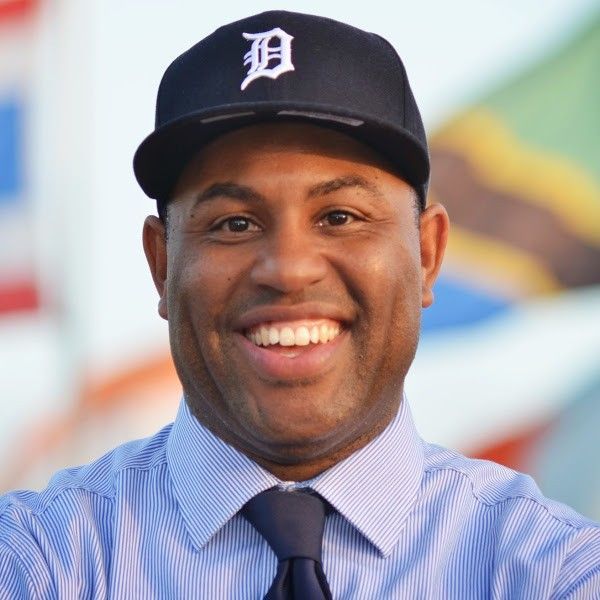
Kim Anthony • May 5, 2023

Josh Okogie almost missed the text. It was 10 days after the NBA season was suspended, and the Minnesota Timberwolves wing was sleeping in. But he woke up to a message that the team had organized a conference call with world-renowned motivational speaker Eric Thomas -- also known as "ET The Hip-Hop Preacher."

"I wasn't even going to join it, but when I saw it was ET, I had to hear him. I joined the call, and he was talking about how the ball is still bouncing," Okogie said. "He was talking about how the season is suspended and the physical ball isn't still bouncing, but just because the ball stops bouncing on the court, it doesn't mean the ball stops bouncing in life.
"And all the coaches were like, 'Wow.' Even I was like, 'Wow.'"

Okogie had been pushing Timberwolves assistant general manager Joe Branch all season to get Thomas to speak to the team. He'd met Thomas last summer while working out at the Chris Paul Basketball Academy. Thomas, who has a close relationship with Paul, made an immediate impact on Okogie. His speaking schedule hadn't lined up with the Timberwolves' plans during the season, but the team was able to bring him in during the most uncertain time the NBA has ever faced.

Thomas spoke to Timberwolves players, coaches and staff for 28 minutes, sharing an uplifting message as he urged players to take a positive outlook.

"Let's write a list of what we have. Let's not focus on what we don't have," Thomas told ESPN he said to the team. "What we don't have, we're going to get that back, but what we have is what we need to focus on because if we don't focus on what we have then we'll be back to what we don't have.

"This game is already a game of inches and not just inches in terms of the game itself," he continued. "It's inches in terms of mental [health], so it's important to cling to what they have instead of what they don't have."

Mental health has become a priority issue for the NBA in recent years, particularly after 
DeMar DeRozan and Kevin Love came forward to discuss their mental health experiences. And while the league offers multiple official support systems for its players -- systems that NBA officials acknowledge might be needed more than ever with the league on hiatus -- Thomas has become the unofficial go-to source of support for players around the league. He's someone they know they can lean on when they're going through difficult times, whether through a personal connection or just through the inspirational messages he posts on social media.

"ET is just a ball of light," Cleveland Cavaliers center 
Andre Drummond told ESPN earlier this season. "His energy, his inspiration, the way he views life and the way he can inspire so many people just by his words is huge. Sometimes I listen to his stuff whenever I'm feeling off or I need a certain message. He has messages for all different types of things."

Thomas has shared his messages directly with NBA veterans such as Drummond, Paul and Kyrie Irving. He has connected with rookies, including Zion Williamson, as part of the NBA's annual rookie symposium. Players point to his rise from his humble beginnings and his raw, powerful delivery of his messages as sources of inspiration.

Now, with the NBA on hold and no return date in sight, Thomas finds those messages resonating like never before.

CHRIS PAUL WAS heading into his first postseason with the Houston Rockets. He'd teamed with MVP James Harden to lead the Rockets to the most successful regular season in team history and the top seed in the Western Conference.

And, while he hadn't heard from Thomas for months, he wasn't surprised to see his trusted adviser's name pop up on his phone. They initially connected when Thomas spoke to Paul while he was with the Clippers, then stayed in touch as the veteran point guard changed cities, with Paul even inviting him to speak at his North Carolina summer basketball camps.

"It's a lot of people that want to see your demise. A lot of people want you to hurt. A lot of people want to take your spot," Thomas told Paul through a voicemail. "So, you've got to understand that and let that fuel you to take your game to a whole different level."

Paul got the Rockets within a win of the NBA Finals before a hamstring injury knocked him out of the series against the Golden State Warriors, who went on to win the title. A year later, Thomas and Paul connected again, with the Houston Rockets point guard presenting the speaker with a customized pair of his Jordan CP3.XII signature sneakers featuring motivational quotes from Thomas such as, "Avoid being your own enemy" and "Most of you don't want success as much as you want to sleep."

Said Paul: "ET is always somebody I know that's going to kick it to me straight. He just makes you be more than you think you can. When I think of ET, I just think of pushing myself. Whenever you think that you have gone as far as you can, you can go a little further."

Thomas rose to the top of his profession despite being a homeless high school dropout. He was born in Chicago to a teenage mother but was raised primarily in Detroit. His biological father wasn't in his life until Thomas was 30.

Thomas spent 12 years working toward getting his bachelor's degree from Oakwood University in Huntsville, Alabama, in 2001, and went on to earn his master's and doctorate from Michigan State University.


He got his big break in 2008 after a speech at Michigan State, where he was working as an academic adviser. He challenged the students in the audience to "wanna succeed as bad as they wanna breathe." The speech was posted to YouTube, where it racked up more than 2 million views.

Thomas now averages 120-200 speeches per year and has worked with numerous professional sports teams including the LA ClippersMilwaukee Bucks, Cleveland Cavaliers, Houston Rockets, Detroit PistonsAtlanta Hawks and Charlotte Hornets.

"I look at his Instagram every day," Hornets forward Miles Bridges said. "I watch his videos all the time before games because he's really inspiring and he motivates me, so I try to look at him all the time. I can come to the game unfocused and watch one of his videos and just lock in right away. That's how powerful he is with his speaking, so I don't think people give him enough credit for that."

Thomas posts inspirational messages every day on Instagram, where he has 1.5 million followers -- dozens of whom play in the NBA. He has more than 435,000 followers on Twitter. Among the notable sports figures who follow his social media accounts are NBA All-Stars Irving, Drummond, Isaiah Thomas, Damian LillardDraymond GreenKhris Middleton and Devin Booker.


"ET is just a ball of light. His energy, his inspiration, the way he views life and the way he can inspire so many people just by his words is huge."

- Andre Drummond

Thomas is also using his social media platform to reach people more directly because of the current global state. After he noticed the spread of COVID-19, he posted his cellphone number in his social media bio, encouraging those in need of motivation to reach out. Timberwolves coach Ryan Saunders did so, and the two have since been in touch daily.

The league added Thomas to its lineup of speakers at the mandatory four-day, NBA Rookie Transition Program 2016. For many newcomers to the league, it's the first time they see him speak in person.

"His speeches are phenomenal," Williamson said. "The way he breaks down wanting to be great, he breaks it down in such a way that you've got to truly look yourself in the mirror and say, 'Do I want to be great or am I just saying I want to be great?' He fuels you to go above and beyond."

SNOW HADN'T YET fallen in Denver, but the days were sometimes gloomy for new Denver Nuggets addition Isaiah Thomas in September 2018.

The two-time All-Star was in an unfamiliar situation, on a one-year deal while rehabbing from hip surgery, when he discovered a new source of inspiration while scrolling through his Instagram feed.

Thomas found one of Eric Thomas' inspirational posts and sent him a direct message. It got an immediate response. Now the free-agent point guard considers the motivational speaker one of his best friends.

"I wish it was mandatory for every professional team to have to sit down and listen to him talk," said Isaiah Thomas, who is not related to the speaker. "I know if you heard him talk and the passion that he talks with, it's going to resonate with all walks of life. It doesn't matter, and that's the type of people I want to be around at all times."

Lately, the two have connected again frequently, with Isaiah Thomas facing the uncertain future of being a recently released free agent in a league currently on hiatus and in a player transaction moratorium. Eric Thomas has also reached out to Allen Crabbe, who was waived by the Timberwolves in late February. Both players assured the motivational speaker that they're in a strong mental space as they try to make their way back.


homas isn't the only option for players in similar situations. The NBA requires teams to provide players access to licensed, clinical mental health professionals at all times. Dr. William Parham, the National Basketball Players Association's director of mental and health wellness, and NBPA player wellness counselor Keyon Dooling have also launched virtual office hours, where players past and present can talk about how best to manage their mental well-being.

"There's a whole bunch that our guys grapple with, and I'm so thankful that we put this infrastructure in place because a lot of guys haven't processed their journeys," said Dooling, who played 13 seasons in the NBA. "They've been too busy achieving, and in quiet moments like this, I think it's a great opportunity."

A communication from the league office was sent to all teams during the week of the NBA suspension about the impact the COVID-19 pandemic might have on mental and emotional well-being. The memo included customized documents with tips, resources and information from mental health and wellness partners, providers and consultants, to help players, team staff and their families maintain mental wellness.

That's why the Timberwolves took on the initiative to collaborate with Thomas.

"We pride ourselves in being player-centric, and as we face this incredibly difficult time, we are looking for ways to thoroughly support our players," Timberwolves president Gersson Rosas told ESPN. "Eric Thomas has a powerful voice with a strong message, and we believe his perspective will encourage our players to stay connected and to motivate them to get through the current challenges we are all facing."

Having their routines taken from them while the league is on hiatus has presented a new and even more difficult challenge. Social distancing has created an environment where players -- used to being surrounded by teammates and fans -- no longer have that daily personal contact.


"A lot of people are isolated," Okogie said. "So definitely, that message pertains in terms of mental health. What can you do to take away from that feeling of being alone?"

One of Thomas' consistent messages is that even in times of isolation, players never have to feel as if they're alone.

"I feel like once we connect, I'm like a shepherd," Thomas said, "and it's my responsibility to not only give you lip service or give you a motivational presentation, it's my responsibility to kind of walk with you as much as you will allow me to walk with you."


ESPN's Malika Andrews contributed to this report.


Never Miss a Story.
SUBSCRIBE

Contact Us

By Kim Anthony December 26, 2025
There’s a difference between working to survive — and working to build something that doesn’t yet exist. Will.i.am understands that difference intimately. Known around the world as a member of the Black Eyed Peas and a hit-making producer who has collaborated with artists like Nas, Ariana Grande, John Legend, The Game, Macy Gray, and Chris Brown, he is now also a tech entrepreneur with a traditional 9-to-5. But even with corporate structure in his life, his focus hasn’t changed. He is still building on his own terms — and encouraging other creators, builders, and founders to do the same. As he told Black Enterprise,“ Work-life balance means that you’re working for somebody else’s dream.” He’s not dismissing self-care. He’s reframing the idea entirely. Because for people who are designing something new — leaders, entrepreneurs, innovators, visionaries — balance looks different. Dream–Reality Balance vs. Work–Life Balance Will.i.am says the conversation shouldn’t always be about work-life balance. It should be about dream–reality balance . “If you’re trying to build something that doesn’t exist, it’s about dream-reality balance. Work-life balance means that you’re working for somebody else’s dream. But if it’s dream-reality balance, then it’s not work. It’s a dream you’re trying to put into reality.” In other words, people who are building something new are not simply clocking in and clocking out. They are taking the vision they see in their mind — and pulling it into the world. And that requires a different level of focus, sacrifice, and persistence. Structure First — Creativity After There was a time when Will.i.am made music all day and tried to squeeze tech work into the margins at night. Now he has flipped that rhythm: structured work during the day creativity and dream-building from 5 p.m. to 9 p.m. intentional discipline around both Not chaos. Not hustle culture. Not burnout. Structure in service of purpose. He encourages young people — especially those who want to create impact, launch businesses, build movements, or innovate — to think the same way: Build your future intentionally. Design your schedule around what you’re becoming — not only what you’re currently doing. Architects of the Future Think Differently Will.i.am is clear: people who are materializing visions cannot always think like people who simply maintain stability. “I’m not really paying attention to this reality., said Will.I.Am to Black Enterprise. "I’m trying to bring that one here… and to do that you have to sacrifice. Work-life balance is not for the architects that are pulling visions into reality.” He isn’t glorifying exhaustion. He is naming a truth: Creators, founders, and visionaries live in both worlds — the world that exists now, and the world they are birthing. And there are seasons when that requires staying committed long after the clock says “stop.” Learnings / Takeaways You must decide which reality you’re committed to. The current one — or the one you’re building. Purpose requires structure — not chaos. Discipline, schedules, and boundaries actually protect the dream. Sometimes “balance” isn’t the goal. Sometimes the goal is alignment: making sure your time reflects what you say matters. Builders think long-term. Entrepreneurs and visionaries live partly in the future — and pull it forward piece by piece. Sacrifice isn’t punishment. It’s investment. You’re trading comfort for creation.  Photo Credit: Will.i.am at the 2023 World Economic Forum by Foundations World Economic Forum is licensed under CC BY 2.0 .
By Kim Anthony December 26, 2025
Dr. Rachel Laryea grew up as the daughter of a Ghanaian immigrant single mother — shaped by resilience, education, and deep curiosity about how people survive, thrive, and build. Her path took her from Goldman Sachs into the heart of global finance, and then into academia at Yale University, where she earned a dual PhD in African American Studies and Sociocultural Anthropology. She walked into Wall Street as both insider and outsider. And that tension — belonging and questioning at the same time — became the catalyst for her new book, Black Capitalists: A Blueprint for What Is Possible. Laryea describes her early corporate experience as a kind of “culture shock.” Goldman Sachs exposed her to wealth, privilege, speed, and power — but also to contradictions. The environment raised more questions than answers and set her on a path of asking: How do Black people navigate an economic system that has often profited from our labor — while rarely inviting us to benefit fully from it? That curiosity didn’t push her away from capitalism. Instead, it pushed her deeper into understanding how it works — and how it could work differently. Challenging the Story: Are Black People Only Labor — Never Beneficiaries? Much of academic conversation about capitalism and race assumes one truth: that Black participation inevitably leads to exploitation. There is history to support that view — slavery, discriminatory banking systems, and a racial wealth gap that remains wide. But Laryea noticed something striking during her time on Wall Street: Black people — and people of color — were not only surviving inside the “belly of the beast.” They were navigating, negotiating, growing, and sometimes redirecting resources back into their communities. Their relationship with capitalism wasn’t simple. It was: complicated strategic layered sometimes contradictory That realization reframed her work. Instead of asking whether Black people “belong” in capitalism, she began asking: What happens when Black people learn to reposition themselves inside the system — intentionally, ethically, and purposefully — to create social good? What Does It Mean To Be a “Black Capitalist”? In Black Capitalists, Laryea distinguishes between two ideas. A Black capitalist is someone who identifies as Black and deliberately repositions themselves within the economy to benefit — and to create social good. This isn’t about greed. It isn’t about replicating harm. It is about strategy, power literacy, and responsibility. Meanwhile, Black capitalism itself, she argues, is race-agnostic. Anyone — individually or collectively — can practice it, if the intention is to use economic tools to build, heal, strengthen, and expand opportunity. This way of thinking disrupts the traditional narrative that capitalism is either villain or savior. Instead, it becomes a tool — one that can be shaped. When Access Becomes Agency Laryea highlights real people using capitalism differently. Like a Goldman Sachs employee and Ifa priest who sees himself as a “spy” — gaining access, gathering resources, and redistributing them into Black communities. Nigerian-born entrepreneur Wemimo Abbey , co-founder of Esusu, whose company allows renters to build credit through their rent payments while preventing evictions. Abbey calls it a “win-win-win” because renters build credit, landlords stay paid and society reduces homelessness. This is capitalism leveraged — not blindly accepted. Choosing to Tell Her Own Story Many women Laryea interviewed feared exposure, even anonymously. Their experiences in corporate spaces mirrored hers: ambition, isolation, ceilings, contradictions, and the emotional costs of navigating systems not built for them. So she chose to stand in the gap — and tell her own story. By naming her experience, she honored theirs. Because so many Black professionals know this tension. We are invited to participate — but not always welcomed to benefit. Not Dismantle vs. Endorse — But Transform Laryea is realistic. Capitalism isn’t disappearing tomorrow. And ignoring it will not shield anyone from its impact. Her question becomes deeply pragmatic: If the system exists — how do we learn it, navigate it, use it, and reshape it toward justice? She calls for collective clarity and alignment. Lock arms. Get on the same page. Use tools wisely. Build equity wherever possible. Choose agency instead of reaction. Not assimilation. Not blind participation. Learnings / Takeaways Here are the deeper lessons her work invites: Power is not evil — but unmanaged power harms. Understanding economic systems is part of community protection and advancement. Access without purpose is empty. It’s not enough to “get in the door.” What matters is how resources flow once you're inside. Capitalism is a tool — not an identity. Tools can build homes — or burn them down. The hands using the tool matter. Participation is not betrayal. Black participation inside systems does not equal complicity when the intent is repair, uplift, and reinvestment. Storytelling matters. Naming our journeys gives others courage to step into power thoughtfully and responsibly. The work is collective. Transformation doesn’t happen in isolation. It happens when communities align — intentionally, strategically, bravely.
By Kim Anthony December 26, 2025
When Damola Adamolekun stepped into Red Lobster after its 2024 bankruptcy, he didn’t just inherit financial distress. He inherited exhaustion, confusion, and broken trust. This wasn’t only a balance sheet problem — it was a people problem. Instead of rushing into drastic cuts, he started with listening. He walked locations, asked questions, and acknowledged what employees were carrying. Many were simply “beat down.” That honest reset created space for real rebuilding to begin. People First — Because Culture Drives Performance Adamolekun treated employees as partners in the turnaround, not as line items. Town halls, conversation, training, and performance incentives restored dignity and ownership. As morale improved, customer experience improved. Recovery didn’t begin with marketing campaigns — it began with people feeling valued again. Restoring Order Before Chasing Growth Red Lobster’s decline had grown over time through high leases, outdated systems, and inconsistent operations. Adamolekun moved decisively but with discipline: renegotiating costly leases trimming unnecessary overhead tightening financial controls modernizing technology and data Speed mattered — but structure mattered more. Stability became the foundation for everything that followed. Modernizing Without Losing the Brand With systems stabilized, innovation was intentional. Menu refreshes, updated presentation, and more accessible pricing brought new energy while honoring the classics guests still love. The goal wasn’t reinvention — it was relevance. Innovation supported the mission instead of replacing it. Culture First. Numbers Next. Projected profitability by 2026 signals more than a financial comeback. It reflects alignment returning across the organization — stronger systems, motivated teams, and customers reconnecting. True turnarounds rarely start in spreadsheets. They begin with clarity, trust, and disciplined execution — and then the numbers follow. Leadership With Courage and Care At just 36, Adamolekun models a leadership style rooted in empathy and decisiveness. He acknowledged pain, took ownership, made difficult choices, stayed visible, and invited people back into purpose. He recognized that morale isn’t “extra.” It is infrastructure. Learnings / Takeaways Repair trust before fixing strategy. People cannot perform in survival mode. Morale is operational. Respected teams deliver better service and stronger results. Discipline beats drama. Order and systems must precede aggressive growth. Innovate thoughtfully. Refresh the experience without abandoning the brand’s core. Culture drives outcomes. Healthy organizations produce healthy numbers.
Show More